
Pokemon GoldSilver
It's part 2 in my series of video game articles in which I choose my favourite entry in a long-running series of games. This week we're looking at Pokemon.
 Possibly the only Nintendo success story to not involve Mr. Miyamoto, Pokemon is the brainchild of Satoshi Tajiri and was based, I'm told, on his childhood love of collecting bugs. Whatever the origin, Pokemon was, and remains, pretty damn popular. The original game was released on the Gameboy (in black and white!) and was quite clever in that it came in two different flavours, red and green (green was renamed blue in the west for some reason). It soon spawned a toyline, a TV show, several movies and an unholy amount of merchandise, but the game came first. The game is a role-playing game in which you control a nameless character (who became known as 'Ash' in the TV show for some unknown reason) who wants to be the Pokemon champion. Pokemon (short for Pocket Monsters) are little critters who can be caught, trained and pitted against each other. There are certain parts of the game you can't get into unless your monsters are a particular strength, which can only be increased through fighting. Occasionally you find a gym and get to fight its leader, allowing you to proceed even further into the game. By the time you get to the end you'll no doubt have a strong team of monsters with which to battle the Pokemon Master and become the best in the fictional land of Kanto. But that's not all, because once you've won you can still keep training your monsters by fighting friends in two-player mode and also trade your monsters in an attempt to collect all 151. The whole point of having two different coloured versions of the game is that some monsters can only be caught in red and others in green, so in order to truly win you need a friend who has the other version.
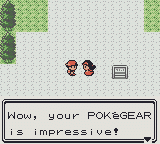
 So that's Pokemon in a nutshell, but it didn't get truly good (and hasn't been nearly as good since) until its first proper sequel, the gold and silver versions. Red and green were followed by a couple of remakes, blue and yellow, but gold and silver were a brand new game, and for the first time presented the world of Pokemon in full colour. It takes place some years after the original in a different country, Johto, and follows broadly the same idea - you're a young lad who wants to collect and train pokemon. There's 100 new monsters indigenous to this new land, although some old favourites come back after a while. You can also trade with older versions of the game in order to transfer your winning team from red and green over to gold and silver. But there are other new things in the second generation of the game. The game is more realistic; you now not only have to keep your pokemon strong, but also happy, and there's a real-time clock built in. Some events only happen at certain times of the day, and the concept of nocturnal pokemon was introduced. Five new 'legendary' pokemon were introduced, all with different methods of catching them, and some pokemon from later games were given infant or adult forms.
But new features are added in every generation of pokemon, so why is the gold/silver generation so much better than the rest, I hear you ask? Well, it's basically a game developers' masterclass on how to do a sequel properly.
Remember I said how in the first game you could complete the quest and there was still more to do? Well this time it's taken to a whole new level. Yes, you can beat everyone in Johto and become the champion, but once you've done that the game isn't even half-complete. You then get a call from one of the characters in the first game, who invites you over to Kanto. So you now get the free run of both games' playing areas. You can then go through the bosses and gym leaders from the original game and beat them again, bearing in mind it's set some years later so they've all got a lot stronger since. Effectively, gold and silver contain a tougher version of red and green as a freebie. Finally, after beating the previous game, you gain access to third, final area in which you get to fight and catch some outrageously powerful pokemon before taking on the ultimate challenge - the protagonist character from red and green, who has since become stupidly difficult to beat. His Snorlax still gives me nightmares. And then when you've beaten him, you still have 251 Pokemon to go find before you're done. Basically, gold and silver raised the bar so high that all subsequent pokemon games were a massive disappointment. Sure, all pokemon games are basically the same, but no sequels since have added more to the overall gameplay than gold and silver, choosing instead to add gimmicks or massive amounts of new monsters.
I've actually played Gold through three times, once in Japanese and twice in English, and my current record is 239 of 251 pokemon caught, so all these years later I've still not truly completed the game, and probably never will because I no longer have any friends with whom I can trade. And now I've started again with Heartgold and Soulsilver, the improved remakes for the Nintendo DS. Both have identical gameplay to the originals but feature better graphics, a new game engine and one or two extra additions from later games.
So to conclude, if you are a game developer with a surprise hit on your hands and fancy doing a sequel, take a look at Pokemon Gold and Silver versions and learn how it's done. Many Pokemon purists insist that only the first generation counts, but I strongly disagree. Later Pokemon games deserve criticism for simply being re-hashes of the first, with so many monsters it's impossible to name them all. Gold and silver did introduce 100 new monsters but that was a minor point compared to all the other cool stuff that was added. Definately the best in the series in my opinion.